

Fiberglass Buildings ProtectCritical Water & Wastewater Treatment Equipment
Water and wastewater treatment facilities rely on pumps, controls, chemical feed systems, screening equipment, instrumentation, and other critical infrastructure that must operate reliably in demanding environments. Temperature extremes, moisture, corrosive chemicals, gases, and other conditions can affect equipment performance and service life.
Shelter Works fiberglass-reinforced plastic (FRP) buildings provide a durable, corrosion-resistant environment to protect this equipment. Each fiberglass building can be engineered to meet site-specific requirements, incorporating insulation, heating and cooling, ventilation, electrical systems, and equipment access while maintaining the shelter's 25-year warranty.
The following projects demonstrate three different ways Shelter Works fiberglass buildings support water and wastewater treatment infrastructure.
Headworks Equipment ata Wastewater Treatment Plant
Problem
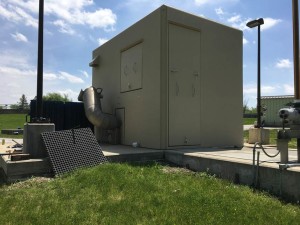
A wastewater treatment facility in University Park, Illinois, needed to protect existing headworks bar screen equipment from the elements. The equipment was located outdoors and needed to run 24 hours a day during the winter months to prevent freezing. The wastewater treatment facility needed an insulated enclosure that could provide freeze protection while accommodating its existing infrastructure and site conditions.
Solution
Shelter Works designed a custom fiberglass building around the existing headworks equipment. Eleven-foot-tall walls accommodated equipment extending above grade, while knockout panels let the building fit around existing piping without modifying the treatment system.
Removable access panels provided maintenance access and could be easily removed during warmer weather to increase ventilation. The insulated fiberglass construction protected the equipment during winter conditions and provided a construction well suited to the wastewater environment.
Result
By eliminating the threat of freezing, the shelter allowed the facility to run the bar screen on an automatic setting rather than continuously. This reduced electricity consumption and unnecessary equipment wear while providing operators with easy access to the system for inspection and maintenance.
Chemical Feed Equipment ata Water Treatment Plant
Problem
A Texas water treatment plant designed to deliver two million gallons of potable water per day needed protection for several chemical treatment processes.
The plant used separate systems for dosing antiscalant, adjusting pH, and controlling biological growth. The pumps, controls, and associated SCADA equipment for each process needed protection, and operators needed a safe environment in which to work.
Solution
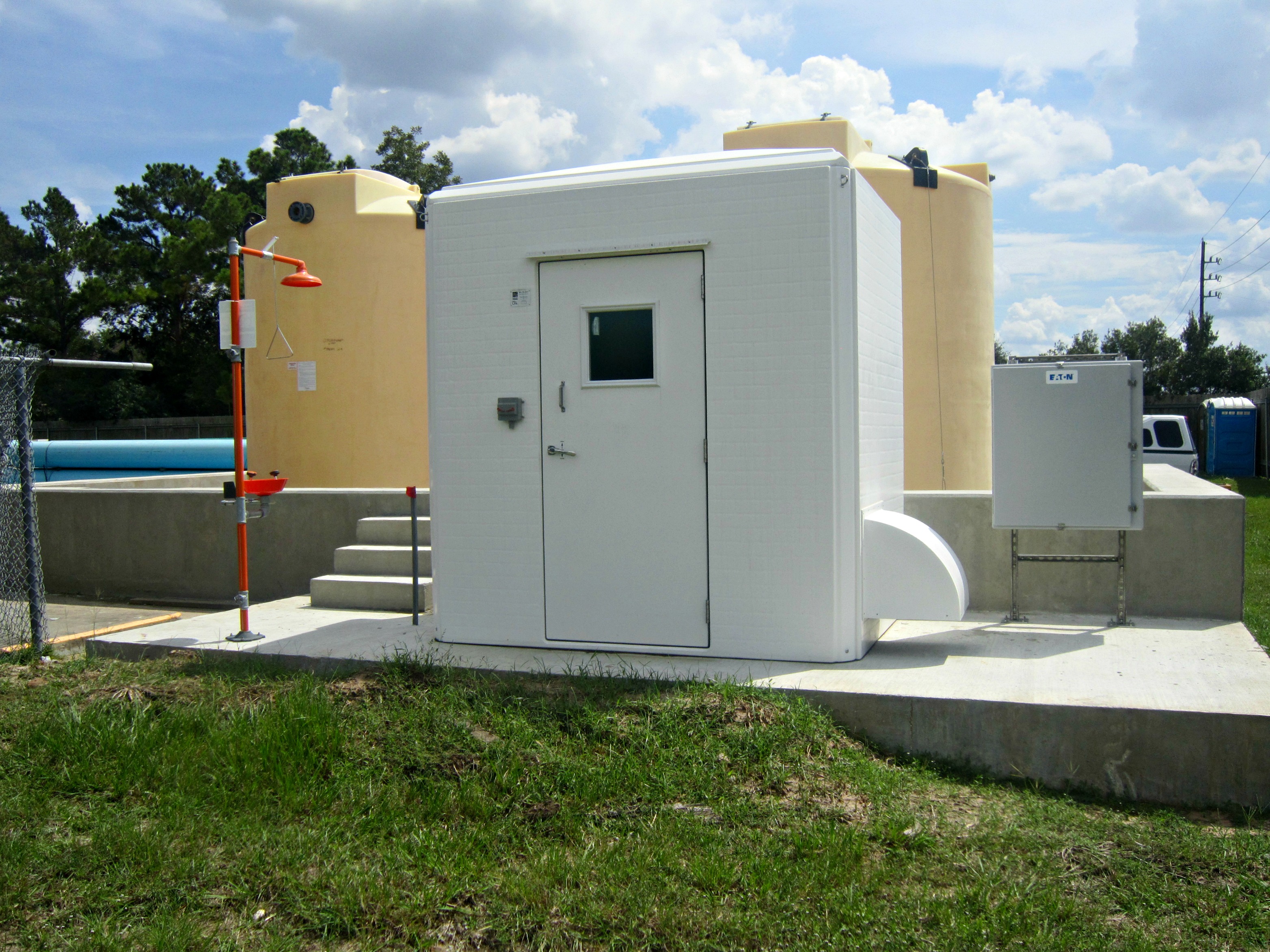
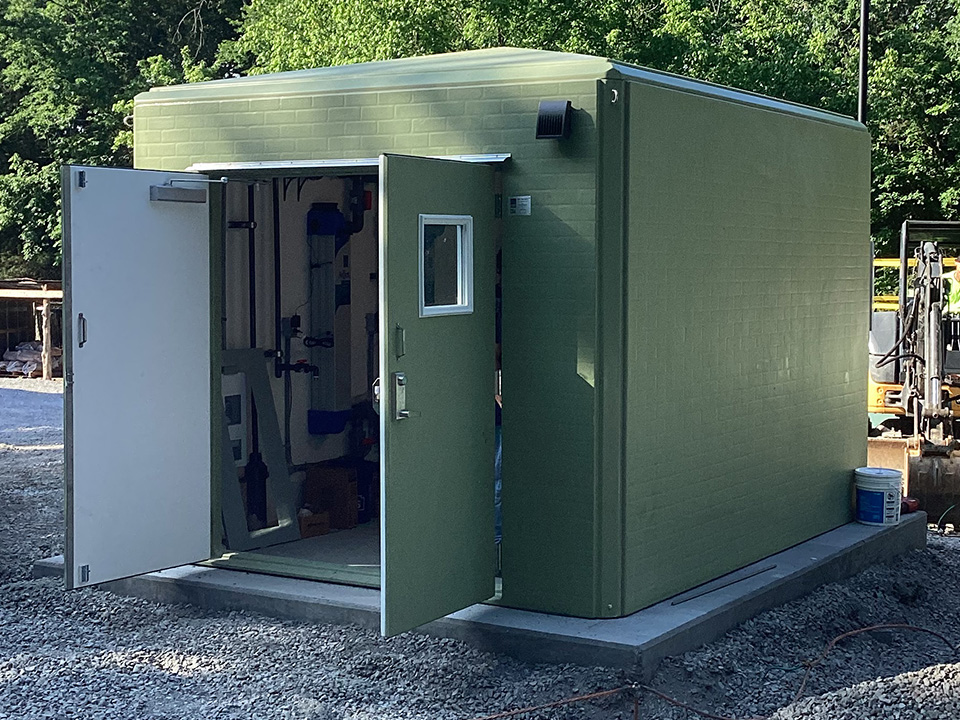
Shelter Works manufactured three 6' x 8' x 8' high equipment shelters, one for each chemical feed process.
The shelters included 3068 doors, safety-glass windows, electrical packages with interior lighting, and corrosion-resistant ventilation systems. The individual shelter approach provided each chemical feed system with a dedicated environment that protected the equipment from the elements.
Result
The three fiberglass buildings protected the plant's chemical dosing and control equipment while supporting the processes required to produce potable water. Factory-installed electrical, ventilation, and lighting systems also allowed for rapid deployment of the shelters.
Sanitary Lift StationEquipment and Controls
Problem
A municipality in Normal, Illinois, needed to protect two sanitary lift stations that pump sewage uphill on its way to the sanitary reclamation district.
The municipality wanted a lower-maintenance alternative to the brick buildings traditionally used for its lift stations.
Solution
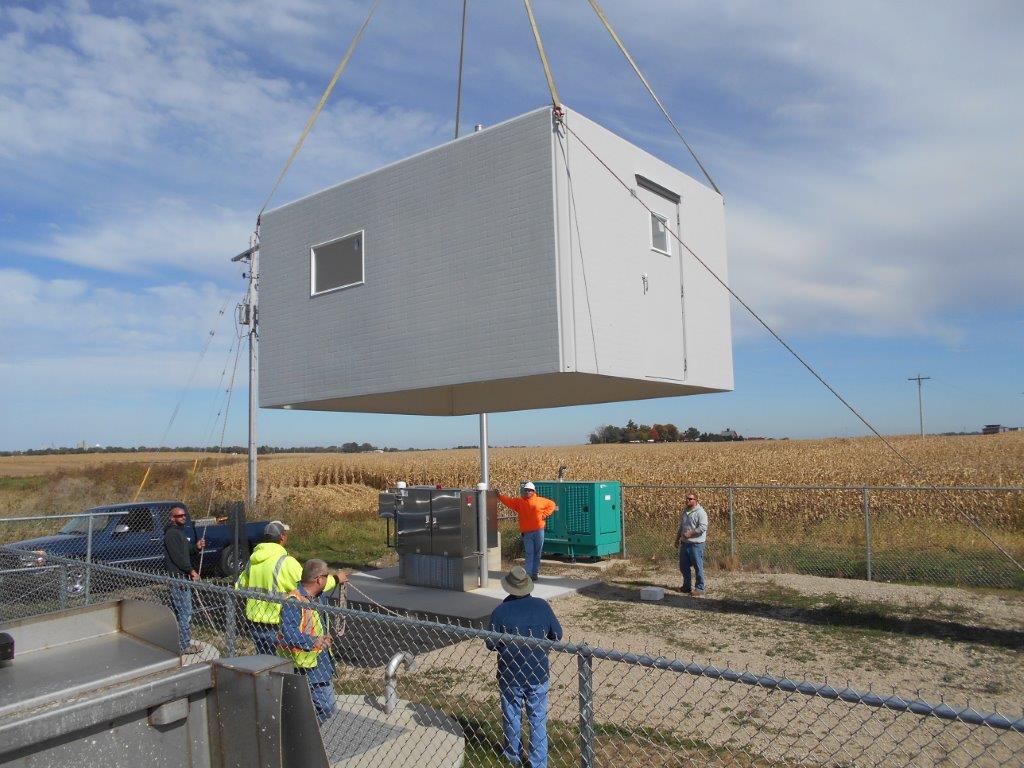
Shelter Works engineered two fiberglass buildings to protect the lift station equipment and controls while providing a controlled working environment for operators.
The buildings included 2-1/2" of insulation in the roof and walls, lighting, HVAC, and doors with 15" windows. These features provided optimal year-round operating conditions while giving personnel a comfortable space to monitor, inspect, and maintain the equipment inside.
Result
The prefabricated FRP buildings provided the municipality with durable, low-maintenance lift station enclosures that could be installed quickly while protecting sensitive equipment from outdoor conditions. Heating, cooling, insulation, and equipment access also created a more practical environment for personnel responsible for maintaining the stations.
One Building Material, Multiple Water and Wastewater Applications
These projects illustrate the range of equipment that fiberglass buildings can protect throughout water and wastewater infrastructure. Applications can include:
- Headworks and screening equipment
- Sanitary lift stations
- Pump stations
- Chemical feed and dosing systems
- Water treatment equipment
- MCCs, VFDs, and electrical equipment
- PLC and SCADA control systems
- Instrumentation and analyzers
- UV disinfection systems
- Water quality monitoring equipment
- Packaged treatment and process skids
Unlike some building materials that require equipment to conform to predetermined dimensions and openings, a custom FRP shelter can be engineered around the equipment. Factory-installed custom features include door locations, removable access panels, formed openings, bulkheads, penetrations, wall heights, insulation, ventilation, HVAC, lighting, and electrical systems, all tailored to project requirements.
Fiberglass construction also offers a key advantage in water and wastewater environments: corrosion resistance. FRP does not rust or corrode and can withstand moisture, many corrosive chemicals, and the atmospheric conditions found in water and wastewater treatment environments. Its non-conductive properties also help protect electrical and control equipment.
Protecting Infrastructure for the Long Term
Water and wastewater treatment facilities contain a wide range of equipment, but an equipment enclosure's objective remains the same: create an environment that helps critical systems operate reliably while providing safe, practical access for the people who maintain them.
Shelter Works fiberglass buildings can be engineered for specific equipment, climates, site conditions, and treatment processes. From a small chemical feed system or lift station to a large headworks building, FRP construction provides a corrosion-resistant, insulated, low-maintenance solution for protecting critical water and wastewater infrastructure.
For new treatment facilities, plant expansions, equipment upgrades, and replacement projects, Shelter Works works with engineers, municipalities, OEMs, and system integrators to develop fiberglass buildings around the specific requirements of each application.