

Fiberglass Buildings ProtectCritical Natural Gas Infrastructure
Protecting Natural Gas Storage, Pressure Regulation, and Filtration Equipment
Natural gas infrastructure relies on equipment that must operate reliably despite exposure to weather, moisture, and temperature extremes. Shelter Works manufactures custom fiberglass-reinforced plastic (FRP) buildings that protect this equipment with corrosion-resistant construction, insulation, passive ventilation, and application-specific features.
The following projects demonstrate how fiberglass buildings protect natural gas equipment while reducing maintenance and, in some applications, eliminating the need for electrical service.
Wellhead Water Collection forNatural Gas Distribution
Problem
Protect Wellhead Separators at Natural Gas Storage Field
Underground storage fields allow utilities to store natural gas during periods of lower demand and withdraw it when needed. Wellhead separators remove water and other liquids from the withdrawn gas to help prevent corrosion, freezing, and damage to downstream equipment.
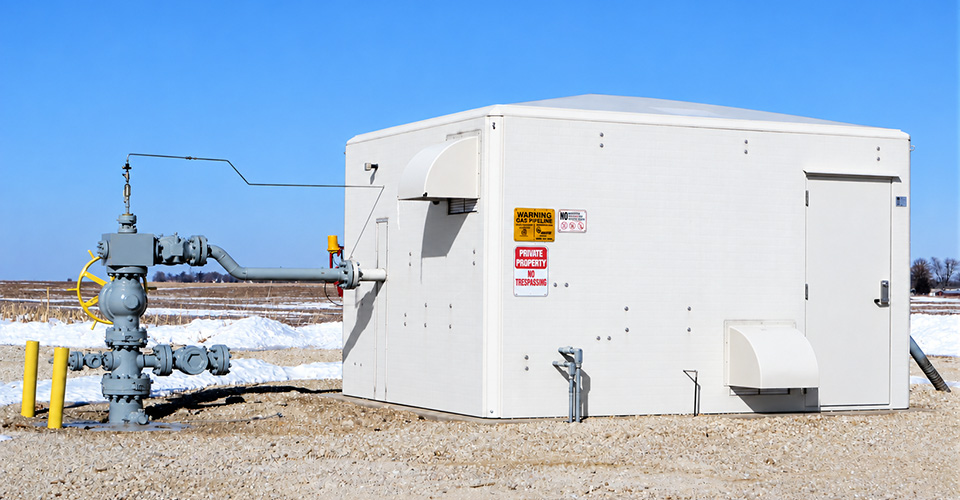
A Midwest natural gas supplier needed seven shelters to protect wellhead separators from weather and temperature extremes while providing ventilation and natural lighting for routine maintenance.
Solution
Insulated Fiberglass Shelters with Passive Ventilation
Shelter Works manufactured seven 12' x 19' x 10' fiberglass buildings with the following features:
- Insulation: 2" in the walls and roof to reduce heat transfer.
- Personnel Access: One 3068 door on a short wall.
- Integrated Skylights: Two molded-in skylights for natural interior lighting.
- Passive Ventilation: Two 18" adjustable aluminum vents with rain hoods.
Result
Equipment Protection Without Electrical Service
The corrosion-resistant FRP shelters protect the wellhead separators from environmental exposure. Insulation helps moderate interior temperatures, while skylights and passive ventilation provide natural lighting and airflow without requiring electricity for these functions.
Natural GasPressure Regulator Station
Problem
Protect Natural Gas Pressure Regulation Equipment
Pressure regulator stations reduce high-pressure natural gas to the levels required for downstream distribution. Regulators, valves, and piping require protection from weather and temperature extremes while remaining accessible for inspection and maintenance.
Solution
A Fiberglass Building with Natural Ventilation
Shelter Works manufactured an insulated fiberglass building with the following features:
- Insulation: 1-1/2" in the walls and roof to reduce heat transfer.
- Structural Reinforcement: 1/2" plywood in one wall to support mounted equipment.
- Equipment Access: One 6068 double door for moving larger equipment.
- Personnel Access: One 3068 door for routine maintenance.
- Integrated Skylights: Two molded-in skylights for natural lighting.
- Passive Ventilation System: One turbine ventilator and two 12" aluminum vents with insect screens and rain hoods.

Result
Accessible Equipment Protection Without Powered Systems
The fiberglass building protects critical pressure regulation equipment while providing access for maintenance. Skylights and passive ventilation eliminate the need for electrical lighting during daylight hours and powered ventilation, reducing installation and operating costs.
Natural GasFilter Separator Building
Problem
Replace Building While Accommodating Existing Infrastructure
Filter separators remove moisture, solids, and other contaminants from natural gas before distribution, protecting downstream regulators, meters, and valves from fouling, freezing, and damage.
A Midwest natural gas distributor needed to replace an existing enclosure that lacked sufficient maintenance space. The new, larger building needed to accommodate existing piping to eliminate infrastructure modifications.
Solution
A Custom FRP Building Designed Around Existing Infrastructure
Shelter Works manufactured a 12' x 20' x 10' fiberglass building, increasing the previous enclosure's length and width by two feet.
The shelter included:
- Insulation: 2-1/2" in the walls and roof to reduce heat transfer.
- Structural Reinforcement: 6" predrilled fastener spacing.
- Equipment Access: One 8' x 8' roll-up door for separator maintenance.
- Personnel Access: One 3068 door with a 15" window for quick inspection.
- Piping Accommodations: Two removable knockout panels with aluminum trim kits.
- Passive Ventilation: Four 12" adjustable aluminum vents with rain hoods.

The removable knockout panels allowed installers to position the building around existing piping, then cut and reinstall the panels to accommodate the penetrations.
Result
Improved Access and Reduced Maintenance
The larger fiberglass building provides clearance for equipment maintenance while protecting the filter separator from environmental exposure. The knockout panels accommodate existing piping without infrastructure modifications, and passive ventilation provides airflow without powered equipment.
Designed for Natural Gas Applications
Built to Protect in Any Environment
These three applications demonstrate the different roles fiberglass buildings can play throughout the natural gas industry, from underground storage and water collection to pressure regulation and gas filtration.
Each application presents different requirements for environmental protection, ventilation, access, insulation, and equipment integration. Shelter Works designs its fiberglass buildings around those requirements rather than relying on a standard, one-size-fits-all configuration.
For remote facilities where electrical service is unnecessary or cost-prohibitive, passive ventilation and molded-in skylights can provide airflow and natural lighting without powered systems. More complex applications can incorporate reinforced walls, custom piping penetrations, electrical systems, and HVAC equipment to accommodate sensitive instrumentation and controls.
Shelter Works' fiberglass buildings provide corrosion resistance, non-conductive construction, low maintenance requirements, and a 25-year warranty, making them a long-term solution for protecting critical natural gas infrastructure.