
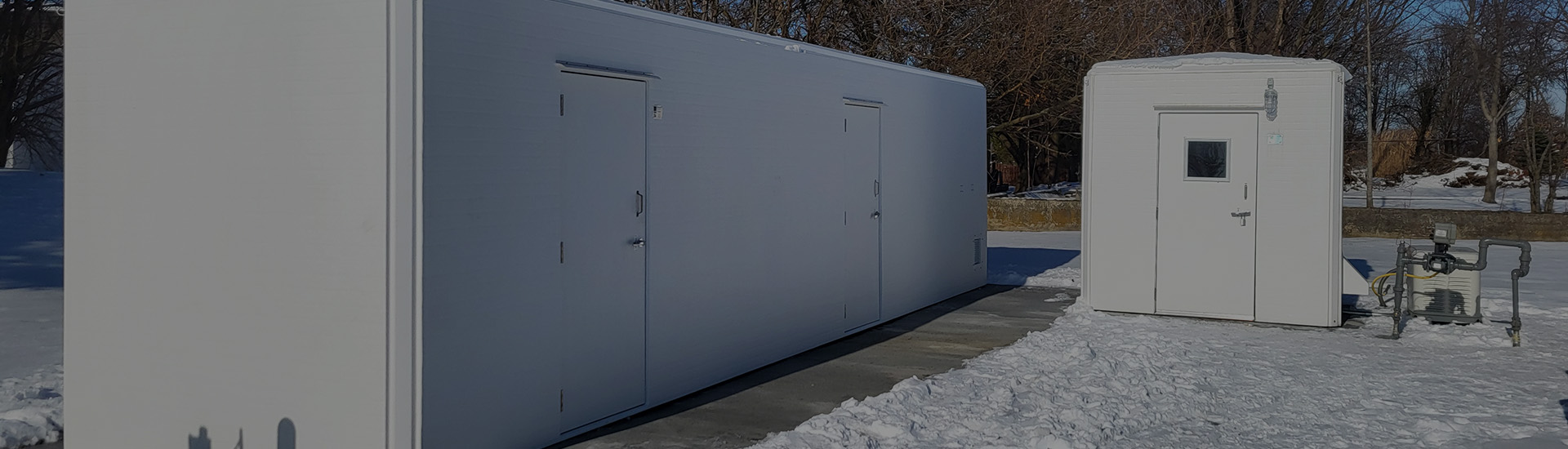
Fiberglass Shelters for Salt Applications
Shelter Works manufactures fiberglass chemical buildings that are ideal for chemical feed and chemical storage.
Protecting Critical Field Equipment in Corrosive Environments
Salt is one of the more corrosive substances encountered in industrial and municipal environments. Whether the exposure comes from concentrated brine, mined salt, deicing chemicals, or salt-laden coastal air, chloride-rich environments can quickly deteriorate steel buildings, increase maintenance costs, and shorten equipment life.
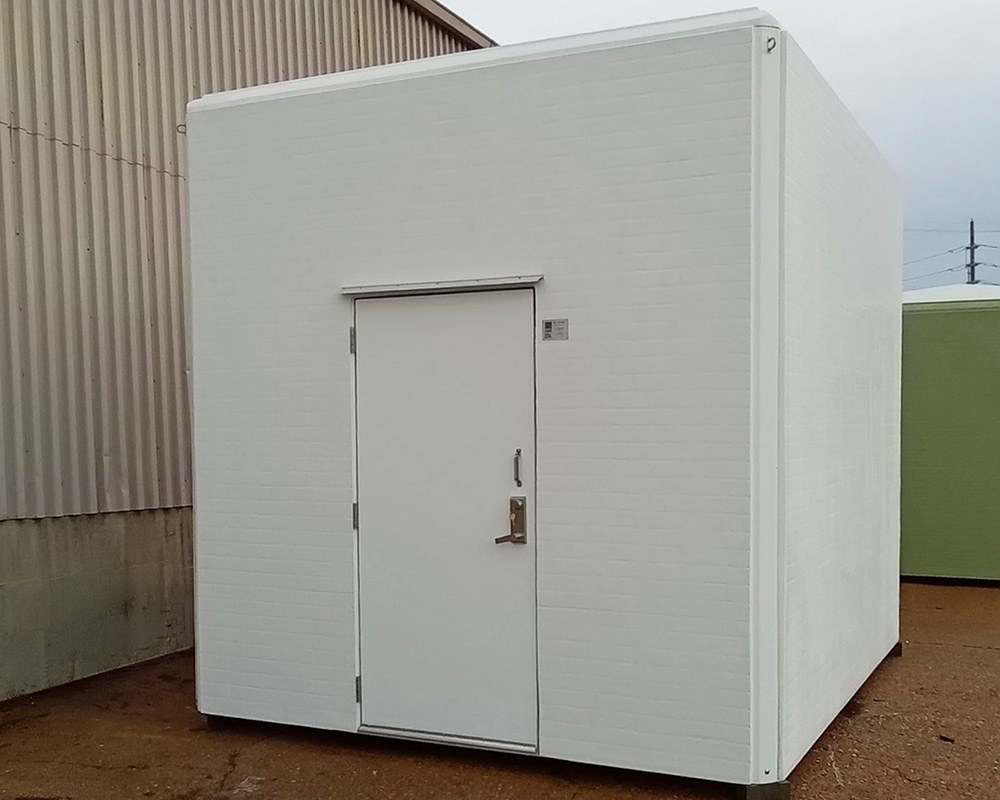
Why Fiberglass Performs Well in Salt Environments Fiberglass reinforced plastic (FRP) enclosures provide a durable, long-lasting protective solution for equipment in salt-heavy environments due to their:
- Corrosion Resistance - Fiberglass does not rust when exposed to salt or salt-laden air. This inherent corrosion resistance helps protect the structure itself while reducing maintenance costs throughout its useful life.
- Moisture Resistance - Salt applications often involve high humidity, washdown procedures, or direct contact with brine solutions. Fiberglass construction resists moisture absorption and maintains its structural integrity in the wettest of operating conditions.
- Long-Term Durability - Fiberglass shelters are engineered to withstand harsh environmental conditions for decades while maintaining their appearance and performance in conditions that accelerate degradation in other building materials.
- Reduced Maintenance - Fiberglass does not require repainting or corrosion repair. FRP shelters require minimal maintenance, helping utilities and facility operators reduce lifecycle costs.
- Thermal Performance - Temperature control is important for preventing freezing and maintaining an optimal operating environment. Shelter Works can custom insulate walls, roofs, and doors up to R-36, for improved thermal efficiency. Adding HVAC equipment, heaters, and ventilation systems support year-round operation.
CASE STUDY
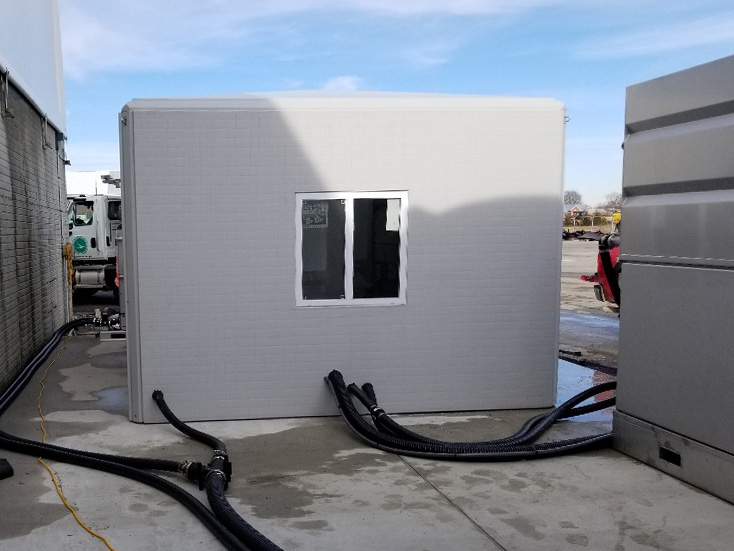
Road Deicing Brine-Making System - Findlay, Ohio
Quick Facts:
- 12’ × 16’ × 8’ Shelter
- R-9 Walls / R-15 Roof
- 3-Point Door Hardware
- Vaporproof Interior Lighting
- Exterior LED with photocell
- Blower Heater
- 36" x 36" slider window
- 2430 lbs
Challenge
Road deicing operations rely on salt brine systems to produce anti-icing and deicing solutions throughout the winter. Constant exposure to concentrated salt solutions, moisture, and freezing temperatures can accelerate corrosion and increase maintenance requirements for conventional buildings.
Solution
Shelter Works supplied a 12’ × 16’ × 8’ fiberglass shelter designed to protect the brine-making equipment year-round. The shelter incorporates insulated walls and roof, corrosion-resistant 3-point door hardware, vaporproof lighting, a PVC junction box, a wall-mounted blower heater, and a large sliding window that allows operators to monitor equipment without entering the building.
Result
The fiberglass enclosure provides long-term corrosion resistance and dependable protection for critical road deicing equipment while minimizing maintenance in a salt-heavy environment.
CASE STUDY
Salt Mine Motor Control Center - Ogden, Utah
Quick Facts:
- 12’ × 16’ × 8’ Shelter
- 10’ x 12’ x 10’ Shelter
- R-21 Walls / R-24 Roof
- 3/4" MGP Reinforcement
- Air Conditioner
- 2800 lbs
Challenge
Motor control centers (MCCs) operating in salt mining facilities must be protected from airborne salt and dust that can damage electrical components and reduce equipment reliability. The enclosure also needed to support a cable ladder installed by the end user while providing cable routing into and out of the building.
Solution
Shelter Works supplied a 10’ × 12’ × 10’ fiberglass shelter engineered to house the MCC. The enclosure features increased insulation in the walls and roof, marine-grade plywood reinforcement in the roof to support the cable ladder, and bulkheads to accommodate incoming and outgoing cables. A formed opening was provided for a through-wall air conditioner that shipped loose and was installed on-site.
Result
The fiberglass shelter provides a corrosion-resistant, dust-tight enclosure that protects the motor control center from the harsh conditions of the salt mine while supporting the facility’s electrical infrastructure with a durable, low-maintenance solution.
CASE STUDY
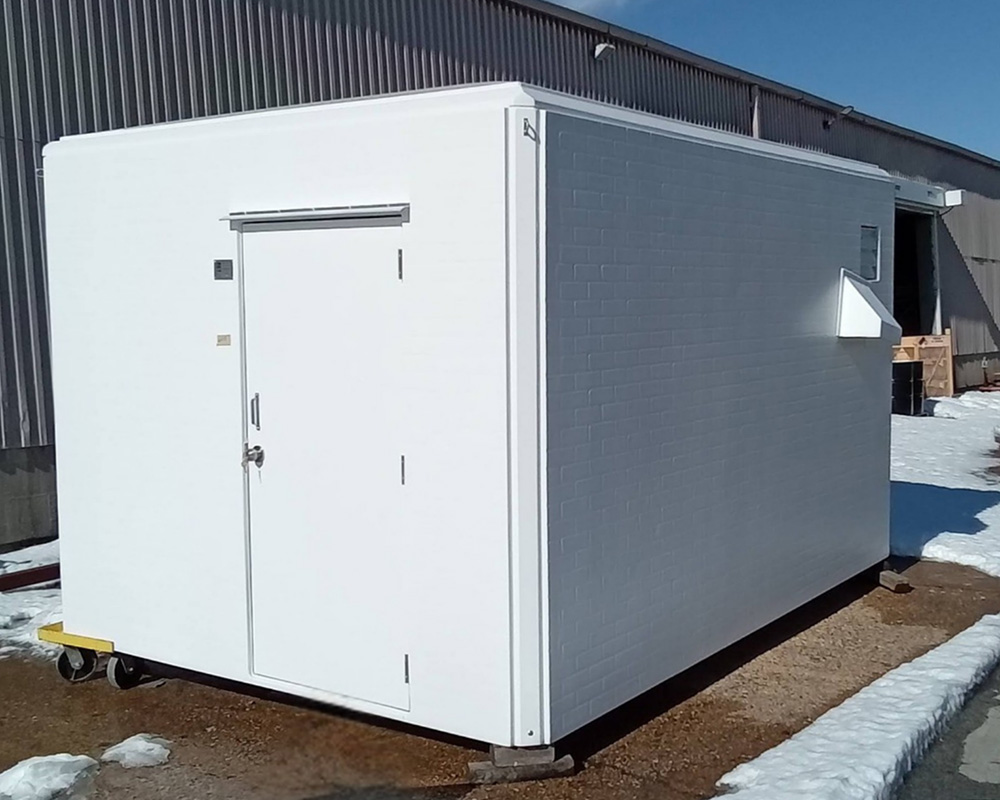
Airport Deicing Effluent Monitoring – Hebron, Kentucky
Quick Facts:
- 12’ × 16’ × 8’ Shelter
- 10’ x 14’ x 8’ Shelter
- R-18 Walls / R-30 Roof
- 19/32" OSB Reinforcement
- Interior and Exterior Lighting
- PE Stamp
- Kentucky State Label
- 3330 lbs
Challenge
Airport deicing operations require reliable monitoring equipment to sample and evaluate runoff generated during aircraft and runway deicing. The enclosure needed to protect sensitive instrumentation from corrosive deicing chemicals while maintaining a safe, temperature-controlled environment during winter operations.
Solution
Shelter Works supplied a 10’ × 14’ × 8’ fiberglass shelter designed specifically for airport service. The enclosure features flame-retardant Elfoam insulation in the walls and roof, providing both thermal performance and enhanced fire resistance compared to standard insulation. Structural reinforcement throughout the walls, roof, and door adds durability, while washdown-rated LED lighting, dual wall-mounted blower heaters, a corrosion-resistant exhaust fan, and a motorized damper maintain a controlled operating environment for the monitoring equipment.
Result
The fiberglass shelter provides a corrosion-resistant, insulated enclosure that protects critical effluent monitoring equipment from harsh winter conditions while supporting safe, reliable operation during airport deicing activities.
CASE STUDY
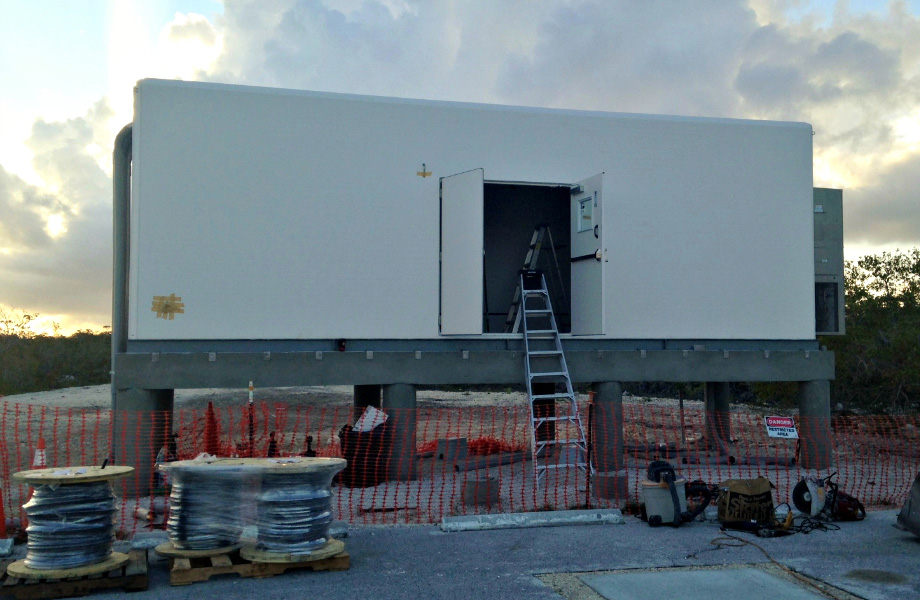
Coastal Telecommunications Shelter – Gulf Coast
Quick Facts:
- 10’ x 30’ x 10’ Shelter
- R-21 Walls / R-21 Roof
- 19/32" OSB Reinforcement
- Interior and Exterior Lighting
- (2) 5-Ton HVAC Units w/Heat
- Steel Base Skid
- PE Stamp
- 12,725 lbs
Challenge
Telecommunications equipment installed near coastal waters is continuously exposed to salt-laden air, high humidity, intense heat, and severe weather. The enclosure needed to resist corrosion, maintain a cool, stable environment for sensitive electronics, and withstand the structural demands of a coastal installation.
Solution
Shelter Works manufactured a 10’ × 30’ × 10’ fiberglass shelter engineered specifically for the Gulf Coast. The shelter features encapsulated ¾” MGP reinforcement throughout the walls, roof, and doors, and 2-inch fastener spacing to meet stringent coastal structural requirements. Three inch insulation in the walls, roof, and floor cavity improves energy efficiency by reducing heat transfer into the building, allowing the redundant 5-ton HVAC system to more effectively maintain the 72° temperature required for reliable equipment operation.
Result
The fiberglass shelter delivers long-term corrosion resistance, energy-efficient thermal performance, and structural durability, protecting critical telecommunications equipment from salt exposure, extreme heat, humidity, and severe coastal weather while reducing maintenance and cooling demands.
Built for Corrosive Environments
From municipal brine systems and salt mines to airport deicing operations, salt exposure creates challenges that require durable protective solutions capable of meeting application requirements. Shelter Works fiberglass shelters resist corrosion, minimize maintenance, and protect critical equipment in the harshest of operating environments.