
Salt Mine Motor Control Center
The Challenge
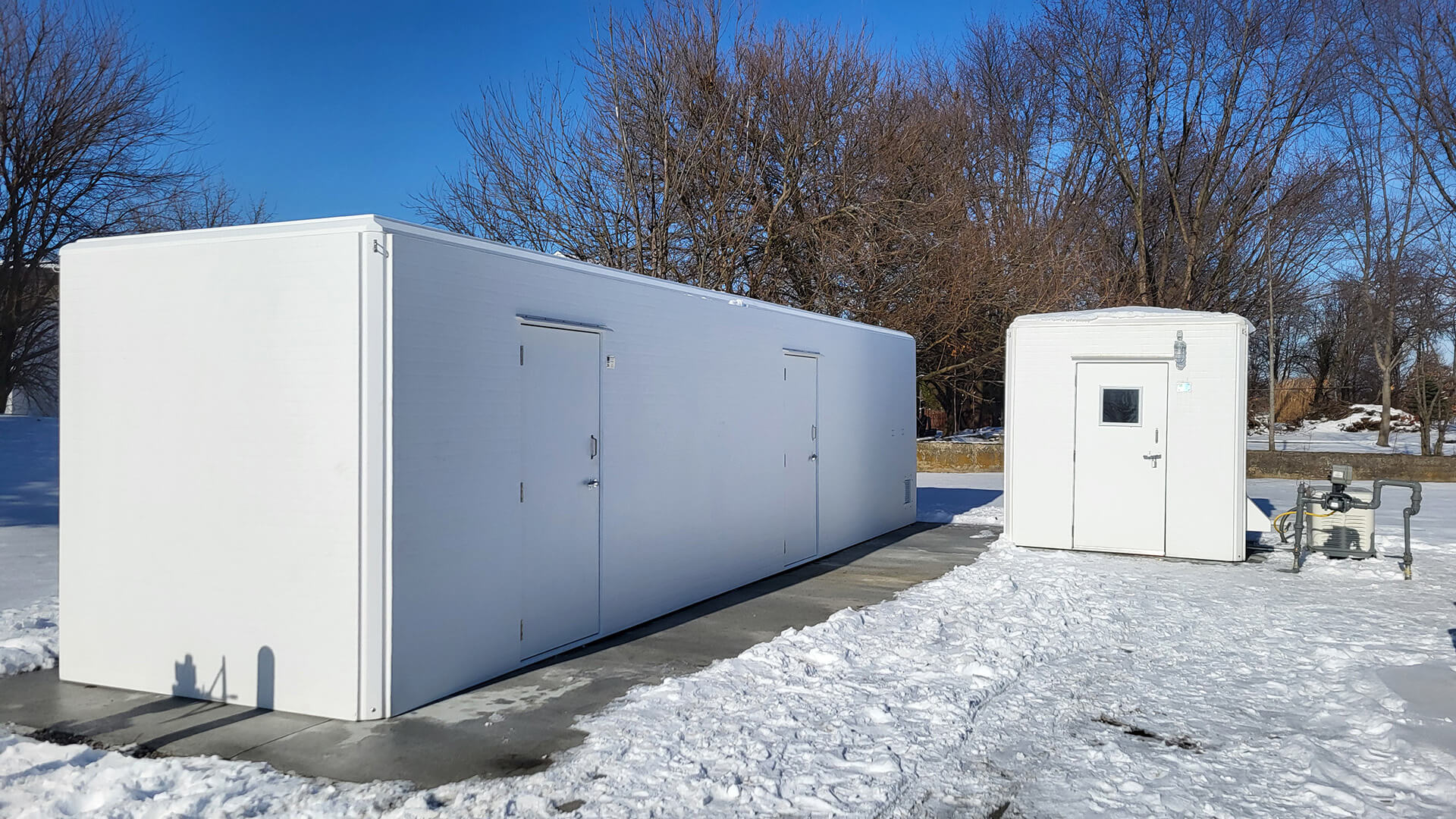
Motor control centers (MCCs) operating in salt mining facilities must be protected from airborne salt and dust that can damage electrical components and reduce equipment reliability. The enclosure also needed to support a cable ladder installed by the end user while providing cable routing into and out of the building.
The Shelter Works Solution
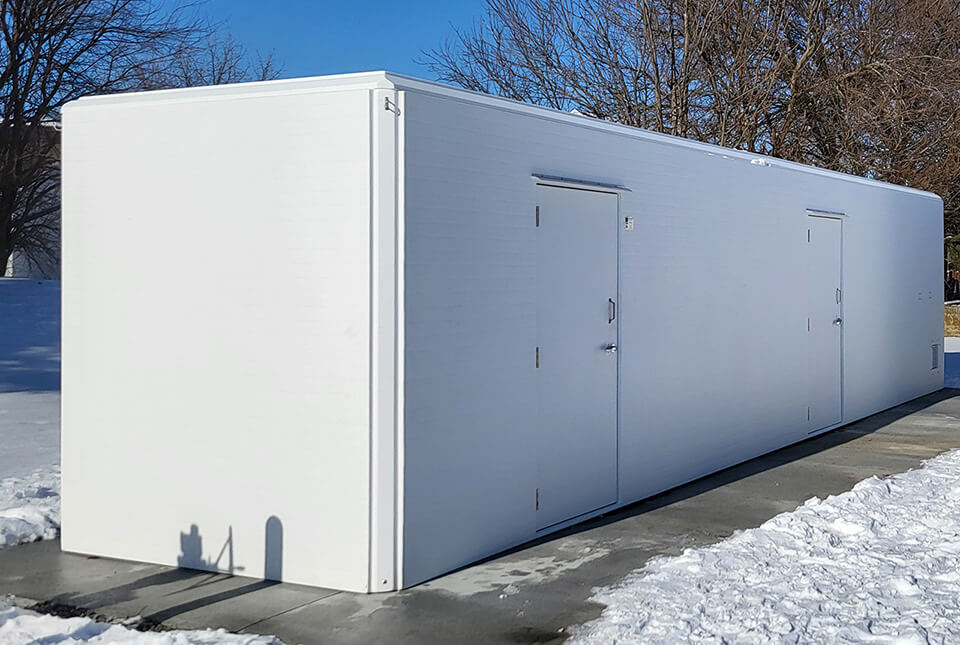
Shelter Works supplied a 10’ × 12’ × 10’ fiberglass shelter engineered to house the MCC. The enclosure features increased insulation in the walls and roof, marine-grade plywood reinforcement in the roof to support the cable ladder, and bulkheads to accommodate incoming and outgoing cables. A formed opening was provided for a through-wall air conditioner that shipped loose and was installed on-site.
Result
The fiberglass shelter provides a corrosion-resistant, dust-tight enclosure that protects the motor control center from the harsh conditions of the salt mine while supporting the facility’s electrical infrastructure with a durable, low-maintenance solution.
- 10’ x 12’ x 10’ Shelter
- R-21 Walls / R-24 Roof
- 3/4" MGP Reinforcement
- Air Conditioner
- 2800 lbs
RTU BUILDING
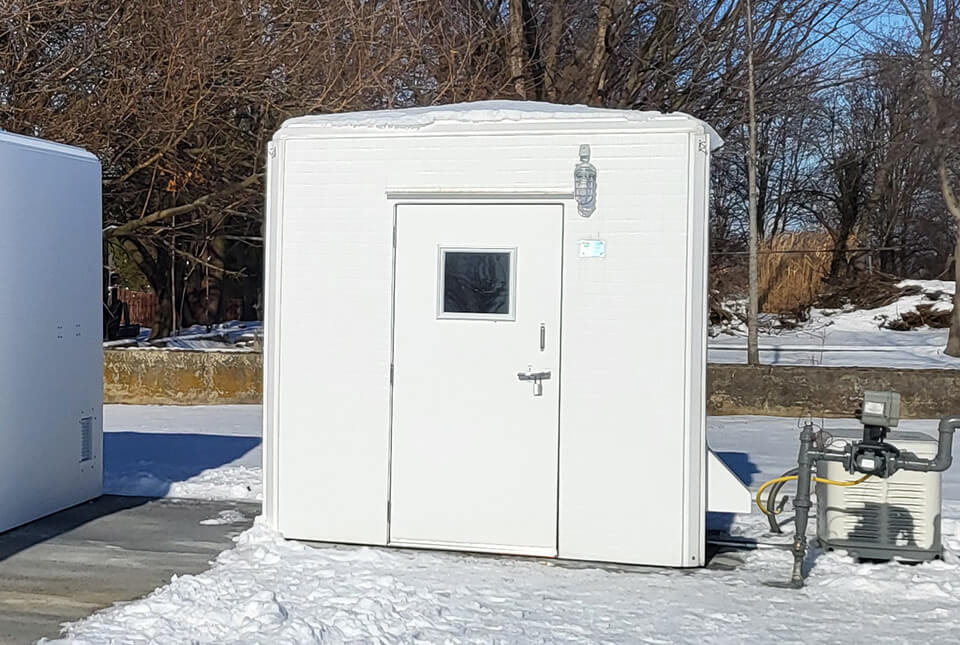
This project also required a separate enclosure to protect a Remote Terminal Unit (RTU) system. The RTU collects and processes pressure, flow, and temperature data from the regulator station and transmits that information to a central SCADA system for remote monitoring and control. This setup enables operators to quickly identify field issues and make real-time operational decisions.
Environmental stressors such as temperature fluctuations, wind, rain, snow, and dust can quickly degrade RTU electronics. A Shelter Works fiberglass enclosure maintains a controlled operating environment, keeps electronics dry, minimizes condensation and corrosion, and stabilizes interior temperatures. These protections maintain signal integrity, reduce downtime, and support long-term system reliability.
Why Fiberglass
Shelter Works manufactured the 8’ x 8’ x 8’ fiberglass RTU shelter knowing that fiberglass offers many benefits that make it an ideal building material for housing both regulator stations and RTUs.
- Strength & Durability - provided by 1-1/2" foam insulation in the walls and ceiling, and wood reinforcement in all four walls.
- Infield Modifications - can be done through a 12" x 12" fiberglass bulkhead, fiberglass only portion of wall, that allows for future field penetrations while preserving the shelter’s 25-year warranty.
- Superior Corrosion Resistance - Fiberglass will not rust, rot, corrode, or decay. It resists both uniform and localized corrosion. Shelter Works fiberglass shelters often outlast the equipment they protect.
- Low Maintenance - There is no need for painting or applying protective coatings. Shelter Works fiberglass enclosures offer the lowest lifetime cost of ownership when compared to aluminum, wood, steel, or concrete alternatives.
- Long-term Weatherability - Shelter Works’ gel coat is a pigmented resin with UV inhibitors. It will not fade due to UV exposure.
Why Shelter Works
Working with Andy Newquist of Relcon, Shelter Works delivered two fiberglass enclosures that met the performance, aesthetic, and noise-control requirements for a residential natural gas installation. The regulator station shelter reduced operational noise, concealed unsightly piping, and protected equipment from weather and vandalism. The RTU shelter provided a stable, controlled environment for sensitive monitoring systems, ensuring reliable SCADA communication. Together, these fiberglass buildings enabled safe, quiet, and dependable natural gas distribution in a densely populated area.