Regulator Station ShelterCase Study
Durable Protection for Regulator Station and RTU in Residential Area
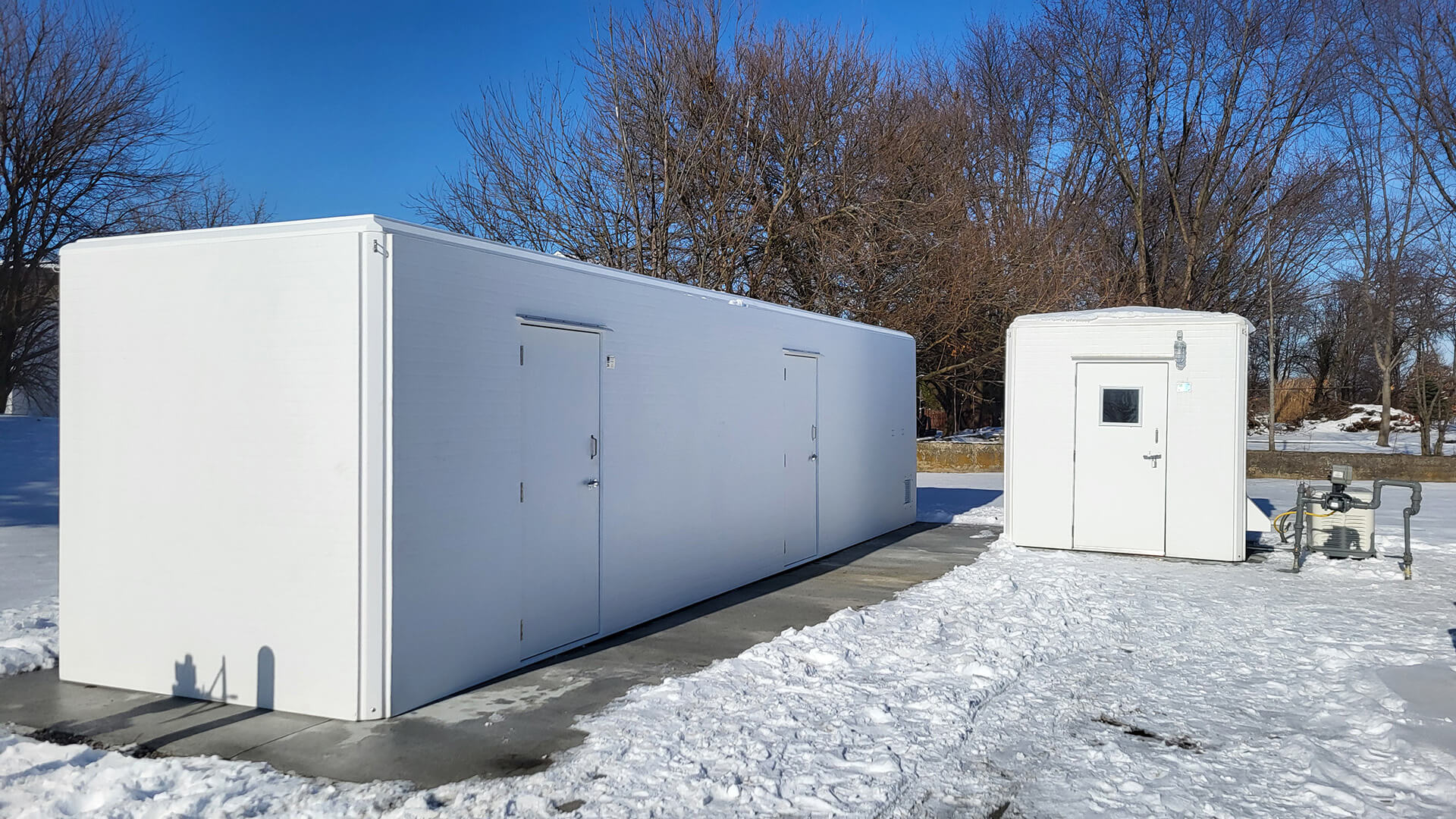
Shelter Works recently worked with Andy Newquist of Relcon in Connersville, Indiana, to provide two custom fiberglass shelters for a Midwest natural gas utility. The project required protection for a regulator station and its corresponding Remote Terminal Unit (RTU) installed in a new residential development. The shelters needed to deliver an aesthetically appealing appearance, minimize operational noise, and protect critical infrastructure from environmental exposure and vandalism.
Regulator Station
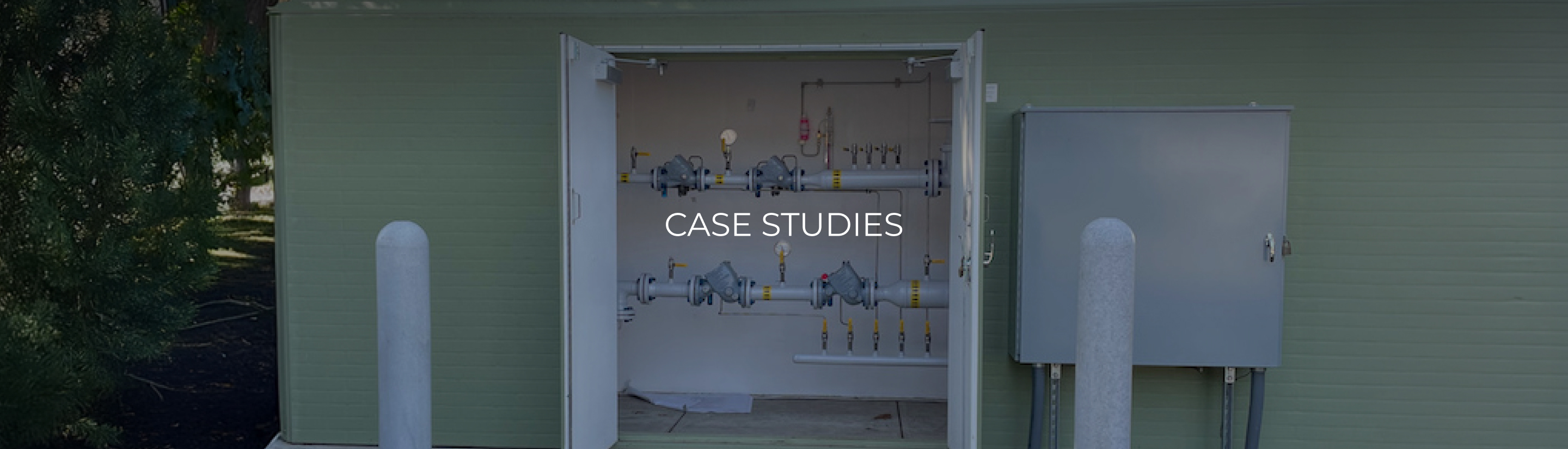
Natural gas regulator stations are assemblies of pipes, pressure-reducing regulators, and relief valves that can operate safely outdoors. In remote or industrial areas, these systems are often free-standing. In populated environments, however, they are typically housed in protective enclosures to conceal piping, improve site aesthetics, and provide a physical barrier against vandalism and unauthorized access. These enclosures also shield critical components from weather, reduce maintenance demands, improve system reliability, and extend service life.
Regulator stations reduce delivery pressure, often generating hissing, humming, and other operational noise that is more noticeable in residential and commercial settings. When installed near homes, businesses, or public spaces, sound-attenuating enclosures help reduce noise pollution while protecting equipment from the elements.
Shelter Features
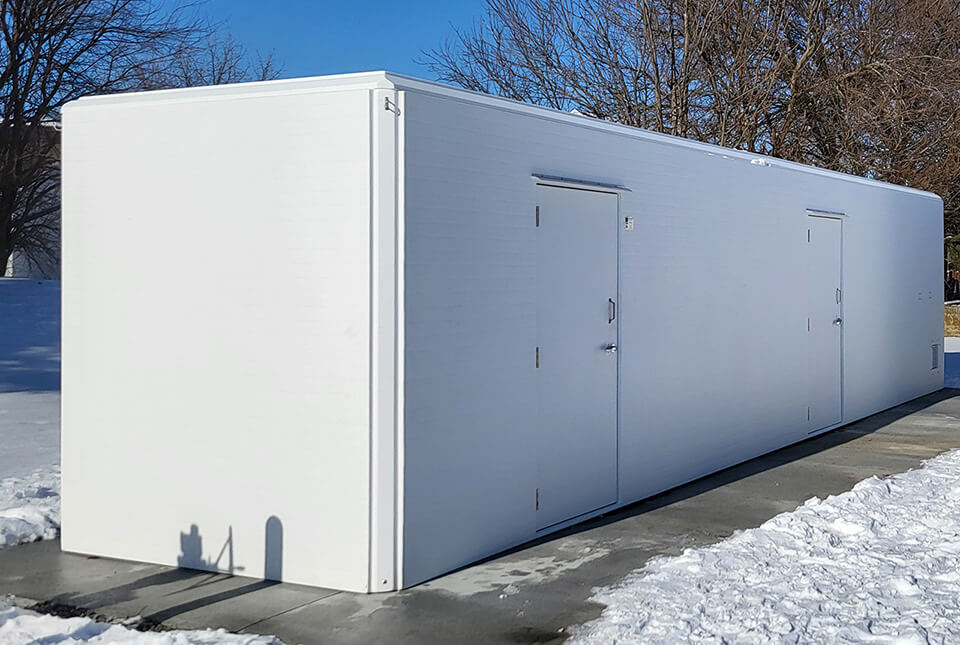
For this project, Shelter Works engineered and delivered an 8’ x 34’ x 8’ fiberglass enclosure that provides both structural integrity and acoustic performance.
- Wood Reinforcement - in the walls, doors, and roof, increasing strength and enhancing sound attenuation. By combining fiberglass, foam insulation, and wood, the enclosure dampens a wide range of sound frequencies.
- Two Roof Trusses - provide roof rigidity and structural support, helping limit deflection and maintain overall stability.
- Sound-attenuated - hoods were also added to the intake and exhaust vents to further reduce noise emissions. Additional encapsulated wood reinforcement was added for additional support.
- Two Single Doors - for easy access to the equipment.
RTU BUILDING
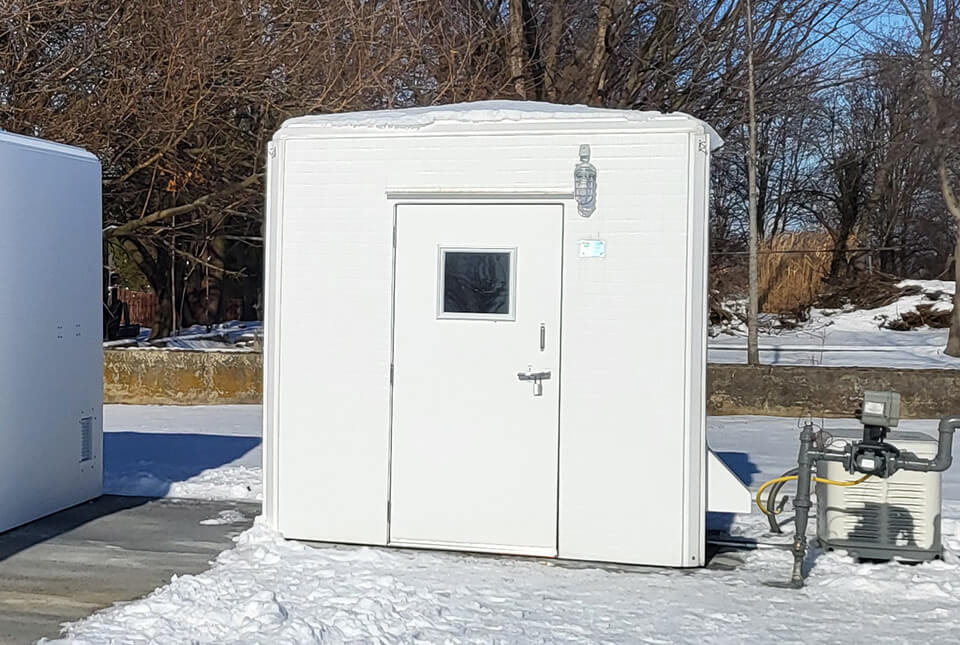
This project also required a separate enclosure to protect a Remote Terminal Unit (RTU) system. The RTU collects and processes pressure, flow, and temperature data from the regulator station and transmits that information to a central SCADA system for remote monitoring and control. This setup enables operators to quickly identify field issues and make real-time operational decisions.
Environmental stressors such as temperature fluctuations, wind, rain, snow, and dust can quickly degrade RTU electronics. A Shelter Works fiberglass enclosure maintains a controlled operating environment, keeps electronics dry, minimizes condensation and corrosion, and stabilizes interior temperatures. These protections maintain signal integrity, reduce downtime, and support long-term system reliability.
Why Fiberglass
Shelter Works manufactured the 8’ x 8’ x 8’ fiberglass RTU shelter knowing that fiberglass offers many benefits that make it an ideal building material for housing both regulator stations and RTUs.
- Strength & Durability - provided by 1-1/2" foam insulation in the walls and ceiling, and wood reinforcement in all four walls.
- Infield Modifications - can be done through a 12" x 12" fiberglass bulkhead, fiberglass only portion of wall, that allows for future field penetrations while preserving the shelter’s 25-year warranty.
- Superior Corrosion Resistance - Fiberglass will not rust, rot, corrode, or decay. It resists both uniform and localized corrosion. Shelter Works fiberglass shelters often outlast the equipment they protect.
- Low Maintenance - There is no need for painting or applying protective coatings. Shelter Works fiberglass enclosures offer the lowest lifetime cost of ownership when compared to aluminum, wood, steel, or concrete alternatives.
- Long-term Weatherability - Shelter Works’ gel coat is a pigmented resin with UV inhibitors. It will not fade due to UV exposure.
Why Shelter Works
Working with Andy Newquist of Relcon, Shelter Works delivered two fiberglass enclosures that met the performance, aesthetic, and noise-control requirements for a residential natural gas installation. The regulator station shelter reduced operational noise, concealed unsightly piping, and protected equipment from weather and vandalism. The RTU shelter provided a stable, controlled environment for sensitive monitoring systems, ensuring reliable SCADA communication. Together, these fiberglass buildings enabled safe, quiet, and dependable natural gas distribution in a densely populated area.