
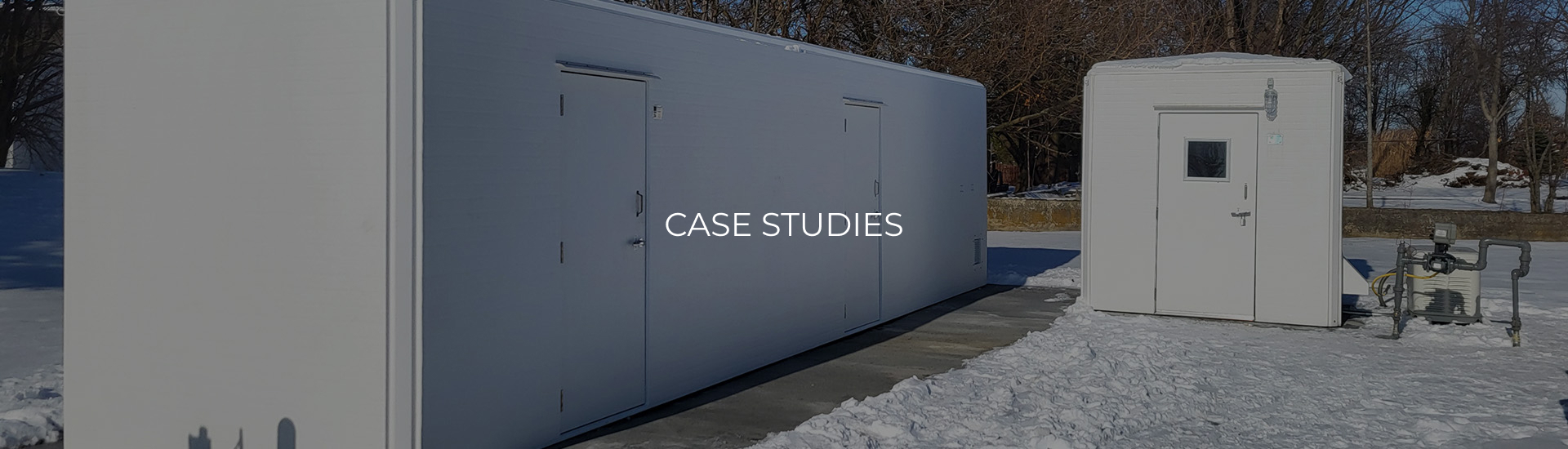
Fiberglass Headworks Building
Fiberglass Headworks Building for Michigan Residential Development
A new master-planned community in Michigan required dependable wastewater infrastructure to serve a mix of single-family homes, townhomes, and shared amenities, including a community park. The engineers needed a durable, code-compliant headworks building to protect the screens that are critical to the preliminary treatment process.
Shelter Works partnered with the team at Kennedy Industries in Wixom, MI, to design a fiberglass building to house the headworks screening equipment, providing long-term protection in a corrosive wastewater environment while meeting hazardous location electrical requirements and customizing it for ease of daily operations.
The Project
The privately managed wastewater treatment facility processes municipal wastewater before discharging treated effluent into receiving waters. At the headworks, the screening system removes wipes, rags, and other large debris that can hinder the operational efficiency of downstream treatment equipment.
The machinery operates in an environment with constant moisture, corrosive gases, and potentially hazardous vapors. It requires a protective enclosure to maintain safe operation, reduce maintenance demands, and shield electrical components from exposure while allowing easy screening removal.
Shelter Works fiberglass reinforced polymer (FRP) shelters deliver both structural strength and long-term corrosion resistance. The fiberglass building will not rust, rot, corrode, or decay when exposed to the moisture, chemicals, and gases produced during the screening process.
Shelter Specs
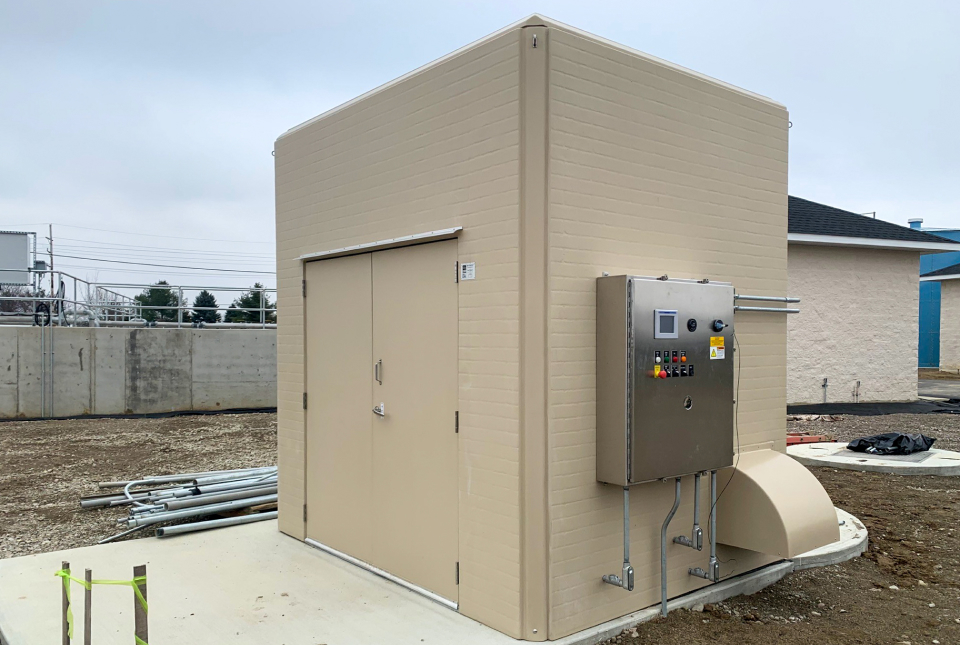
For this project, Shelter Works engineered and delivered an 8’ wide x 10’ long x 8’ height with these specs:
- Insulation - 2” foam insulation in walls and ceiling ~R-15 provides freeze protection, improves energy efficiency, and structural integrity.
- Electric Classification - Class I, Division 1 (C1D1) hazardous location package that includes lighting, exhaust, and heater.
- 6068 Double Doors with Trip-proof Threshold - For easy screenings removal.
- Reinforcement - Wood reinforcement in walls and roof for improved structural integrity and support for hanging components weighing over 10 lbs.
- Bulkhead - Allow cables and piping to pass through the wall without compromising wall integrity.
- Removable Roof - For future replacement and repairs.
Why Shelter Works
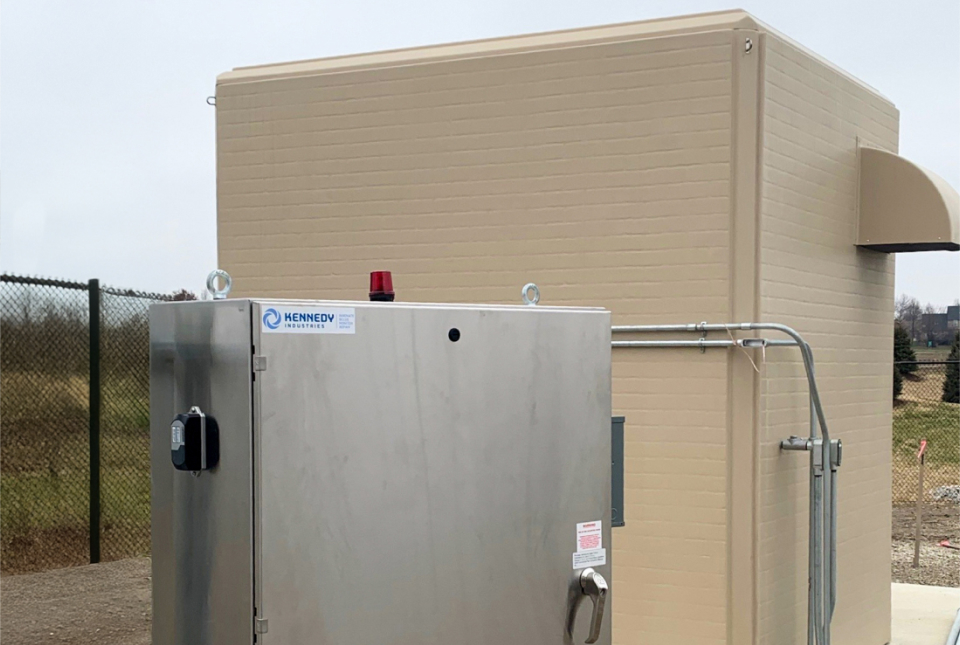
Engineered for Hazardous Environments - Headworks areas may contain flammable or explosive gases, making electrical safety a high priority. The integrated C1D1 electrical package ensures all electrical components meet hazardous location requirements. Explosion-proof lighting, switching, heating, and ventilation allow operators to safely access and maintain equipment while reducing the risks to personnel and infrastructure.
Controlled Interior Environment - The 2” foam insulation in the walls and ceiling helps stabilize interior temperatures and protect mechanical and electrical systems from Michigan’s seasonal extremes. The insulated fiberglass building’s supports reliable equipment operation, reduces condensation, and improves overall energy efficiency.
Customizable - Fiberglass-encapsulated wood reinforcement adds strength and rigidity to support heavy equipment. This gives the shelter the strength of traditional construction without the ongoing maintenance and corrosion risks associated with steel or wood-frame buildings and strut channel hanging systems. The result is a long service life and reduced lifecycle cost.
Reliable Support for Preliminary Wastewater Treatment
Screening equipment serves as a critical first step in the wastewater treatment process, and housing it within a Shelter Works fiberglass headworks building protects the system from weather and freezing temperatures while reducing corrosion-related maintenance. The fiberglass enclosure improves operator safety and supports the reliable performance of electrical and control systems, enabling safe, dependable operation in corrosive and hazardous environments and ensuring long-term performance.